


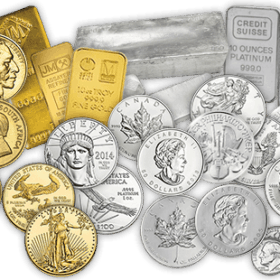
 What is Bullion?
Bullion refers to precious metals, for example, gold or silver which have been refined and manufactured. This will be in the form of ingots traditionally, however, coins can also be classified as bullion.
Purchasing bullion is a simple way of protecting your money. This could be in the form of investment gold or a commemorative coin. Bullion can also just be simply purchased as a gift for someone rather than as a financial investment.
Bullion is classified by way of being made up of particular levels of purity. Bullion ingots must possess a fineness of 99.5%, and a bullion coin must be 90% in the European Union.
The word ‘bullion’ derives from the word ‘boullion’, which is a reference to the boiling process used to melt the metals during refinement.
Bullion as an Investment
Bullion is classed as investment gold or investment silver. This can grant particular tax benefits to customers subject to the rules of their country of residence.
The gold and silver bullion markets are both popular forms of investment with a range of benefits to each metal.
Bullion Bars
Gold bars are a highly desired way of buying bullion today, as they provide an inexpensive, cost effective way of owning it.
Silver bullion bars offer an even cheaper alternative to gold, whilst still allowing the buyer the opportunity to own a precious metal in a cost effective product.
Bullion Coins
Prior to the twentieth century, bullion coins were the common circulating method of purchasing goods. It was the norm for most businessmen and nobles to carry around a gold or silver coin. The early twentieth century, along with two world wars and economic depression, saw the metals used in coinage change to cheaper alternatives, such as cupro-nickel. Since the release of the first Gold Krugerrand in 1967 however, bullion coins have increased in popularity, though they are now used for investment purposes, or collecting in the case of rare coin sets such as the Queen’s Beast.
Bullion Prices and Influences
The price of bullion bars or coins is usually determined by the weight of the metal. A one ounce gold coin will be the same as, or very close to, the spot or fixed price (depending on the gold dealer) of gold at that time. Some bullion coins can have higher premiums if they are rare or particularly collectible, this is known as a numismatic (or semi-numismatic) coin.
The price of gold and silver is set on a regular basis and will be determined by supply and demand, alongside larger global economic trends.
Paying Tax on Bullion
Investment gold (bullion bars/coins) sometimes have tax reliefs or exemptions depending on the country. In the UK, investors can take advantage of VAT and Capital Gains Tax exemptions on various gold products, allowing an already good investment asset be even better.
How to Store Bullion
A high priority for investors of bullion should be secure storage. Personal storage enables you total control over your investment, allowing you to hide your gold in a safe place, or by purchasing a home safe. This enables you to move or sell your assets as and when you desire. Investors can alternatively store their bullion via a storage company that specialises in the secure storage of bullion.
Original text source: https://www.bullionbypost.co.uk/info/bullion/
Original image source: https://singaporesilverag.wordpress.com/2016/09/08/heres-how-much-gold-and-silver-you-need-for-the-crises/
